Systems
Health Is More Important Than Ever in the Age of AI
AI agents saved me hours, and I spent them on more work, not on the gym. The point of all this productivity is a better life, so I'm pointing my agents at my health too.
By Mohanad Anan 10 min read
In this essay · 8 sections
- 01 The Productivity Paradox
- 02 What Is the Point of All This Productivity?
- 03 I’m 31, and I Still Feel Like I’m 18
- 04 My AI-Powered Health System
- 05 Discipline as a System, Not Just a Feeling
- 06 The Future of Personal Health Is Exciting
- 07 My Personal Experiment: Getting Back to 11% Body Fat
- 08 Let AI Do the Work. Don’t Forget to Live.
The Productivity Paradox
I’ve recently noticed something quite ridiculous about my own behavior.
We are entering an age where AI agents can do an extraordinary amount of work for us. They can research, write, code, analyze, automate, plan, and execute tasks that would have previously required hours, days, or even entire teams.
In theory, this should give us more free time than ever before.
And yet, I found myself doing the exact opposite.
Instead of spending more time at the gym, I was spending less. Instead of using AI to free up my schedule, I was filling that newly available time with even more work.
The more productive my AI agents became, the more ambitious I became. Suddenly, projects that once seemed impossible were within reach. Ideas that would have taken months to execute could now be built in days.
And because there was always something new I could create, I kept going.
One more feature. One more project. One more idea.
Before I knew it, I was sacrificing my physical and mental well-being in the name of productivity, even though the very technology enabling that productivity was supposed to make my life easier.
That’s the paradox of AI productivity: the more time we save, the more time we risk giving back to work.
And I believe we need to be extremely conscious of this.

What Is the Point of All This Productivity?
Think about it.
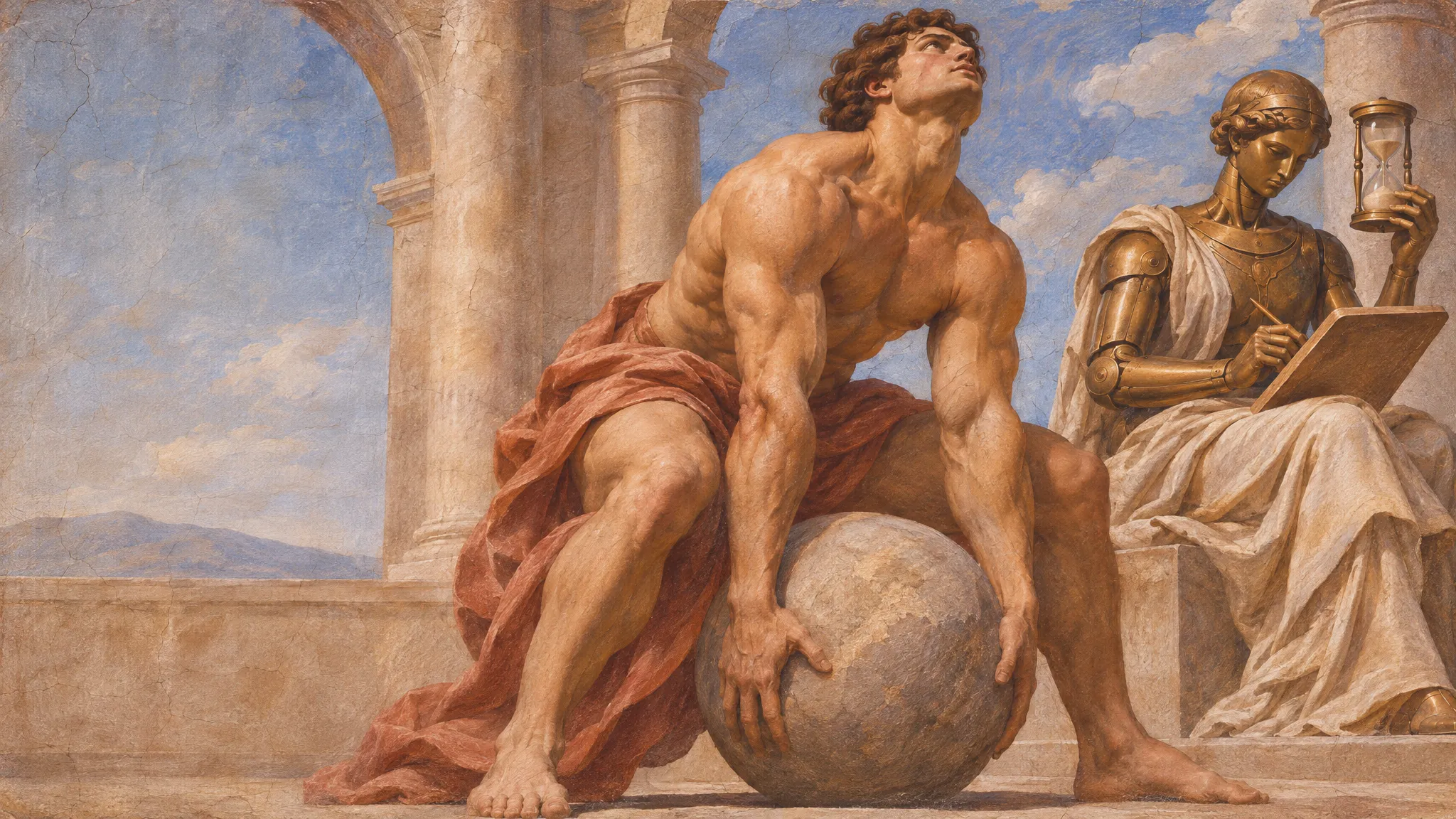
What is the point of having access to nearly unlimited intelligence, powerful AI agents, incredible technology, and the ability to build businesses faster than ever before if we cannot take care of ourselves?
What is the point of becoming financially successful if our bodies are falling apart?
What is the point of achieving extraordinary things if we are constantly exhausted, stressed, physically weak, or mentally drained?
I believe we sometimes confuse the means with the end.
Productivity is not the destination. Success is not the destination. Even technology itself is not the destination.
The destination is a better life.
A life where we have the freedom, energy, health, and ability to enjoy the things that matter to us.
And that includes our families, our partners, our friends, our communities, and ourselves.
There is another perspective I find important: taking care of your health isn’t only a responsibility to yourself.
It’s also a responsibility to the people you love.
Your physical and mental well-being influence how much energy, patience, attention, and support you can offer the people around you.
Of course, health is never entirely within our control. But taking care of the things we can influence is one of the most meaningful investments we can make.
In that sense, I see health as more than a personal priority. I see it as a moral responsibility.
I’m 31, and I Still Feel Like I’m 18
As I’m writing this in November 2026, I’m 31 years old.
And something that genuinely makes me happy is that, physically and mentally, I still feel remarkably similar to how I felt when I was 18.
And no, I’m not saying that as some kind of coping mechanism for getting older.
I genuinely feel that way.
Maybe it’s genetics. Maybe it’s the years I’ve spent working out. Maybe there’s a psychological component to it. I honestly don’t know.
But I appreciate it enormously.
And it makes me think about something important.
What if, instead of accepting that getting older necessarily means becoming weaker, less mobile, and less capable, we deliberately invested in preserving our physical abilities for as long as possible?
Not because we can prevent aging, but because we can influence how we experience it.
I want to be strong, mobile, energetic, and physically capable at 40, 50, 60, and beyond.
I want to continue lifting weights, playing sports, traveling, exploring, and enjoying life without feeling unnecessarily limited by my body.
That’s why I’ve become increasingly interested in taking my health seriously across multiple dimensions: strength, mobility, cardiovascular fitness, nutrition, sleep, recovery, skincare, and mental well-being.
And here’s where AI makes everything even more interesting.
My AI-Powered Health System
The beautiful thing about living in the age of AI is that we can now apply the same intelligence and automation that we use in our businesses to our personal lives.
I’ve started doing exactly that.
My setup is surprisingly simple.
I wear a Google/Fitbit health tracker that continuously collects information about my activity, sleep, heart rate, steps, and other available health metrics.
Every morning, shortly after waking up, I weigh myself and record the result.
I’ve also built my own workout and nutrition tracking application, where I can track what I eat, how I train, and how my body develops over time.
And the interesting part?
My AI agents have access to this information.
My Claude Code agents and other AI assistants can work with the data, analyze patterns, help me plan workouts, and monitor my consistency.
Instead of relying entirely on my own memory, motivation, or endless research, I now have an intelligent system that supports my fitness goals.
And the potential is enormous.
Training That Actually Understands My Body
Every person has different strengths, weaknesses, preferences, and physical characteristics.
In my case, for example, my upper body is considerably more developed than my lower body.
And within my upper body, my chest is probably my most dominant muscle group.
This means that blindly following a generic workout program is not necessarily the most effective approach for me.
I would rather follow a program that accounts for my actual development, my goals, my recovery, and my preferences.
And that’s what I’m using AI to help me do.
My agents can analyze my previous workouts, identify patterns in my training, suggest adjustments, and help design routines that prioritize the muscle groups I want to improve.
Over time, the system can adapt based on the data I’m collecting and the feedback I provide.
Of course, AI doesn’t magically know everything about my body. It can make mistakes, and health-related decisions still require judgment and, where appropriate, professional advice.
But it can dramatically reduce the friction involved in researching, organizing, and optimizing my fitness routine.
I’m no longer starting from scratch every time I want to improve something. I’m building a system that learns from my history.
Discipline as a System, Not Just a Feeling
This is perhaps my favorite part.
We often talk about discipline as though it’s purely a matter of willpower.
And to some extent, it is.
But I’ve become increasingly convinced that our environment and systems play an enormous role in how consistently we behave.
If tracking your meals is complicated, you are less likely to do it.
If planning your workouts requires too much effort, you might skip the planning altogether.
If nobody notices that you’ve stopped training for a week, it’s easy to let one missed workout turn into five.
That’s where AI agents can become surprisingly useful.
My goal is to have my agents continuously monitor the information I choose to share with them and proactively identify when I’m drifting away from my habits.
If I stop logging my weight, the system can remind me.
If I consistently miss workouts, it can flag the pattern.
If my nutrition starts deviating from my goals, it can highlight that and help me adjust.
If my recovery looks insufficient, it can suggest reconsidering the intensity of my next training session.
Not to turn my entire life into some obsessive optimization project, but to remove unnecessary friction from doing the things I already know are important.
AI cannot replace discipline, but it can help us build an environment where discipline becomes easier.
And that distinction matters.
The goal isn’t to become dependent on an agent telling us what to do every minute.
It’s to have a supportive system that makes good decisions easier and keeps us accountable without turning health into another exhausting job.
The Future of Personal Health Is Exciting
What fascinates me is that we’re still at the beginning of all this.
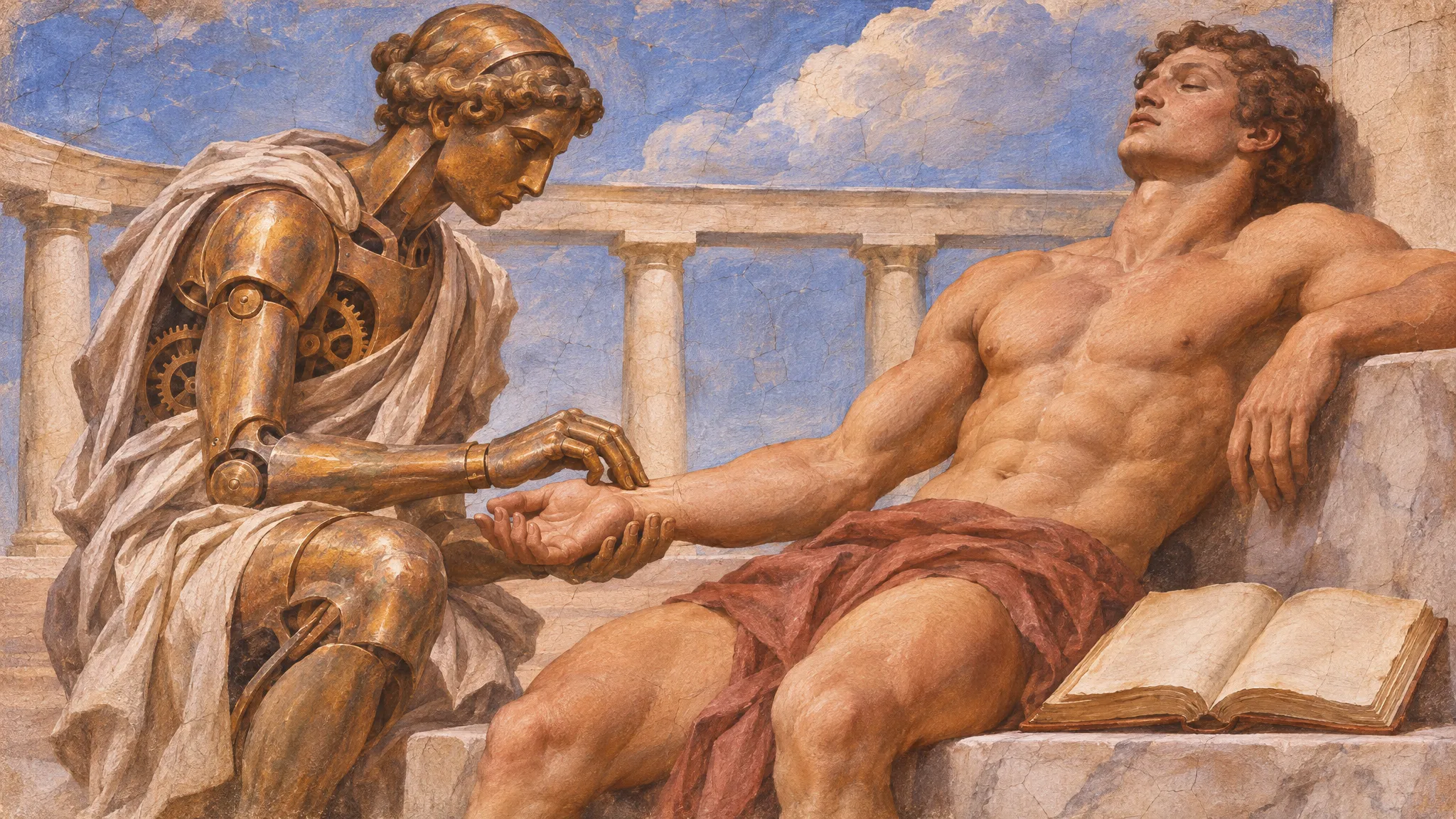
Imagine a future where your personal AI understands your fitness goals, training history, nutrition, sleep, physical limitations, and preferences.
It knows when you last trained your legs, how your strength has progressed over the past six months, and whether you’re recovering adequately.
It helps you plan your meals, adjust your training, schedule your workouts, and understand the trends in your health data.
And because AI is becoming increasingly capable, you don’t necessarily need to be an expert in programming, nutrition, or exercise science to benefit from these systems.
You can describe what you want, connect the information you’re comfortable sharing, and let intelligent software handle much of the organizational work.
Of course, these systems need privacy protections, reliable data, and appropriate human oversight.
But the opportunity is extraordinary.
For me, this is one of the most exciting applications of AI: not just building more successful businesses, but improving the everyday quality of human life.
More strength. Better habits. Better sleep. Greater physical freedom.
And hopefully, more healthy years to enjoy the people and experiences that make life meaningful.
My Personal Experiment: Getting Back to 11% Body Fat
I also want to make this post a personal commitment.
Right now, I estimate my body fat to be somewhere around 20–25%.
My goal is to get back to approximately 11% while preserving as much muscle mass and strength as possible.
It’s an ambitious target, and I’m aware that a lower body-fat percentage doesn’t automatically mean better health. The process, recovery, and how I actually feel matter just as much as the number.
But it’s a goal I’m excited to pursue.
My current target is to reach it by the end of February or, at the latest, mid-March 2027, provided I can make progress sustainably.
Over the coming months, I want to put my AI-powered health system to the test.
Can it help me stay more consistent?
Can it help me make better training and nutrition decisions?
Can it support my accountability without making the process unnecessarily complicated?
And most importantly, can I make meaningful progress toward my physical goals while continuing to build the projects and businesses I’m passionate about?
We’ll see.
I’m not interested in simply looking leaner. I want to become stronger, healthier, more mobile, and more capable.
And I want to prove something to myself: that being ambitious in business and being ambitious about health don’t have to compete with each other.
With the right systems, they can reinforce each other.
Let AI Do the Work. Don’t Forget to Live.
I believe we’re entering one of the most extraordinary periods in human history.
Artificial intelligence is going to change how we work, how we build businesses, how we learn, and how we spend our time.
But amid all the excitement about productivity, automation, and the future of intelligence, I think we need to remember something very simple.
Your body is not another resource to sacrifice in pursuit of productivity. It’s the foundation that allows you to enjoy everything productivity creates.
If AI saves you three hours, you don’t necessarily need to spend those three hours building something else.
You could go to the gym.
You could take a walk.
You could cook a healthy meal.
You could sleep an extra hour.
You could spend time with someone you love.
Or you could simply enjoy being alive.

There is something almost ironic about building intelligent systems capable of doing our work while we neglect the one body and mind through which we experience the world.
I don’t want to fall into that trap.
I want AI to make me more productive, absolutely.
But more importantly, I want it to make me freer.
Freer to move, to explore, to create, to love, and to experience life.
Because at the end of the day, the real promise of AI isn’t that we’ll be able to work nonstop. It’s that, perhaps for the first time, we won’t have to.
And I think it’s time we started living like that.
Mohanad
Düsseldorf, 08 November 2026