Systems
Operator vs Performer: Stop Doing Business, Start Building One
Most founders build a job that happens to make money. Operators build a machine that delivers results even when they are tired, distracted or absent.
By Mohanad Anan 9 min read
In this essay · 15 sections
- 01 1) The Fundamental Shift: From Craft to Control
- 02 2) What It Actually Means to “Build a System”
- 03 3) Systems and People Are the Product (Not Your Craft)
- 04 4) The E-Myth Revisited: The Technician Trap (And the Escape)
- 05 5) The Operator’s Religion: Predictability
- 06 6) Elon Musk: First Principles + Systems + Talent Density
- 07 7) Richard Branson: Brand + Delegation as a Growth Engine
- 08 8) Tilman Fertitta: Operations Discipline and Throughput Thinking
- 09 9) The Parts of a Business That Barely Change
- 10 10) First Principles Definitions (So You Can Think Clearly)
- 11 11) Divisions: The Operator’s Secret Weapon
- 12 12) Hiring: The Real Bottleneck
- 13 13) A Simple Mental Model: Buckets vs Pipes
- 14 14) The Final Integration: Make Growth Inevitable
- 15 Tomorrow’s Integration Exercise (One Move)
Most entrepreneurs don’t actually build businesses.
They build a job that happens to make money.
And the trap is subtle: you can be talented, get clients, deliver good work, even grow revenue… and still be stuck in the same mental model:
- “I succeed when I perform.”
- “The business grows when I push.”
- “Quality depends on me.”
- “If I’m not in it, it breaks.”
That mindset creates a ceiling. Not because you’re lazy or not smart. But because it’s structurally incompatible with scale.
An operator thinks differently:
- “I succeed when I design.”
- “The business grows when the system improves.”
- “Quality depends on standards.”
- “If I’m needed, something is missing.”
This isn’t about being a cold corporate robot. It’s about graduating from survival-mode entrepreneurship into something calmer, more predictable, more powerful.
Let’s build the lens.
1) The Fundamental Shift: From Craft to Control
Being great at your craft is dangerous because it creates a false belief:
“The craft is the business.”
But the craft is only one part of the business. And it’s rarely the part that determines whether the business becomes real.
A business is not “what you do.”
A business is how results happen repeatedly.
If you deliver great outcomes but can’t reproduce them without heroics, you don’t have a business. You have talent. And talent is fragile.
Operators trade talent-dependence for system-dependence.
The goal is simple:
Make the business deliver outcomes reliably, even when you are tired, distracted, or absent.
That’s what “operating” means.
2) What It Actually Means to “Build a System”
People say “system” and mean:
- Notion pages
- SOPs
- automations
- checklists
Those are artifacts.
A system is something deeper:
A system is a cause-and-effect machine.
It takes inputs, transforms them through a process, and produces predictable outputs.
If it’s not predictable, it’s not a system yet.
Here’s a clean definition:
A business system =
- A clear outcome it exists to produce
- A repeatable process to produce it
- A standard for quality
- A way to measure it
- Someone accountable for it
- A loop to improve it
That’s it.
Everything else is decoration.
If your “system” doesn’t have measurement and accountability, it’s a document, not a system.
3) Systems and People Are the Product (Not Your Craft)
This is the part that most founders don’t want to accept:
Your real product is not your skill.
Your real product is the system + people that reliably produces the outcome.
If clients buy you, you’re stuck.
If clients buy your system, you’re free.
A true business is a packaged promise delivered by a machine:
- The machine is the process.
- The operators are the people.
- The quality is the standard.
- The predictability is the measurement.
Your craft matters, but it must be translated into:
- standards
- templates
- checklists
- training
- QA
- feedback loops
So that the business can deliver the craft without needing your presence.
This is why systems thinkers obsess over hiring.
Because you’re not hiring “help.”
You’re hiring the human components of the product.
4) The E-Myth Revisited: The Technician Trap (And the Escape)
The most important idea in The E-Myth Revisited is simple:
Most small business owners are technicians who started a business.
They’re good at the work. So they assume starting a business is just doing more of the work.
Then the business grows, and they get buried.
They don’t become owners—they become the most expensive employee.
The book’s escape route is the operator mindset:
- Build the business as if you’re franchising it.
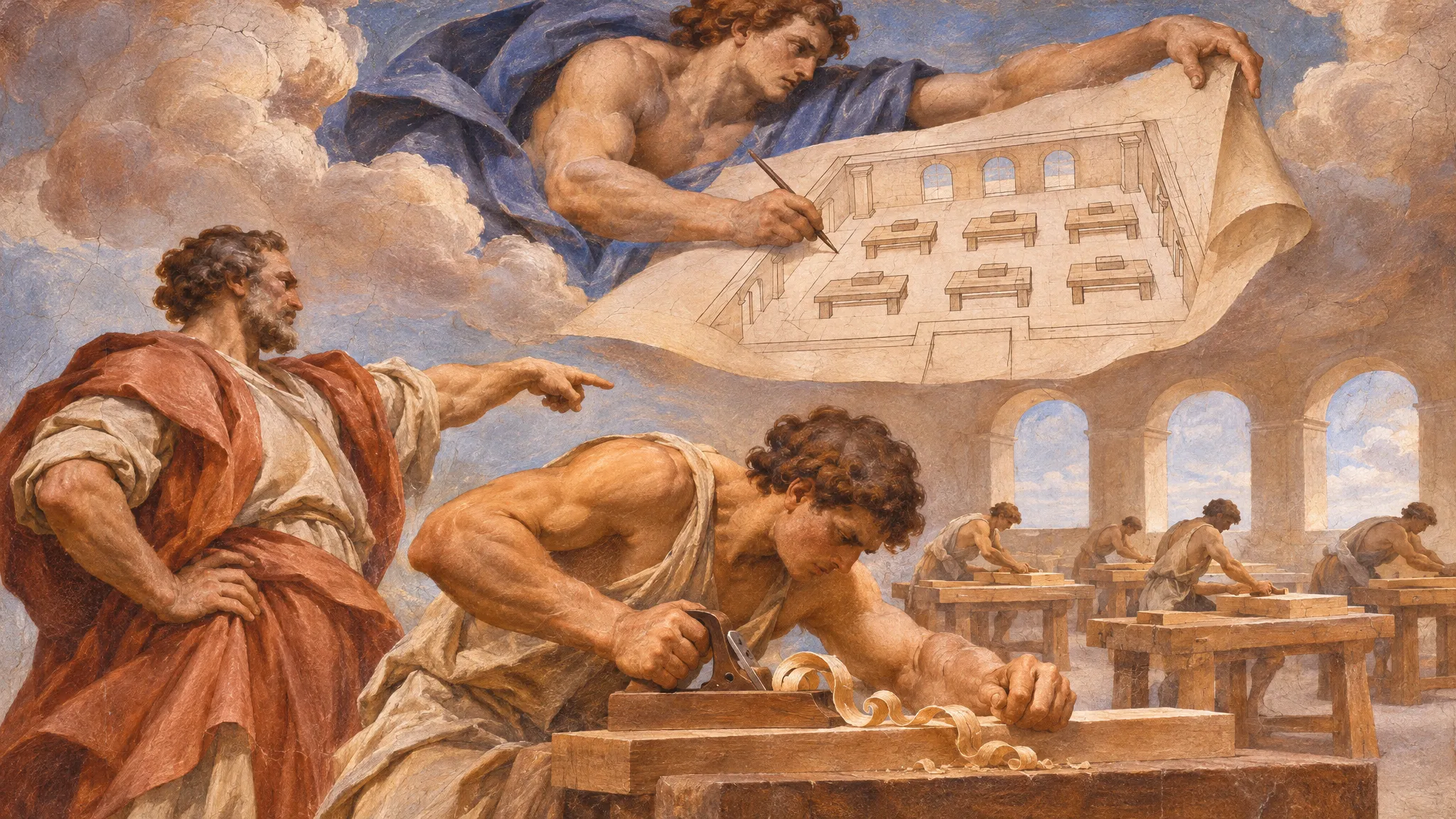
- Design the steps so the results can be reproduced.
- Turn your “talent” into a system others can follow.
This is not about making everything robotic.
It’s about making the outcome consistent.
In E-Myth terms:
- Technician: “I do the work.”
- Manager: “I manage the work.”
- Entrepreneur/Operator: “I design the work.”
If you feel stuck, it’s usually because you’re living in technician mode while expecting entrepreneur outcomes.
5) The Operator’s Religion: Predictability
A performer wants freedom.
An operator wants predictability.
Predictability isn’t boring. Predictability is power.
When you can predict:
- lead flow
- close rate
- delivery capacity
- churn
- profit
…your emotions calm down. Your fear drops. You stop guessing. You stop “hoping this month works out.”
You start making decisions like a builder, not a gambler.
This is why operators love numbers — not because they worship spreadsheets — but because numbers remove fantasy.
Fantasy is expensive.
6) Elon Musk: First Principles + Systems + Talent Density
Elon Musk is controversial, but if you strip away the noise, one operator lesson stays:
Big outcomes come from systems that make progress inevitable.
At Tesla and SpaceX, the “product” isn’t Elon’s personal skill at engineering.
The product is:
- manufacturing systems
- engineering review systems
- hiring systems
- decision systems
- iteration speed
- quality thresholds
First principles thinking helps you avoid inherited constraints:
- “That’s how it’s done” becomes irrelevant.
- You redesign the process from physics/economics realities.
But here’s what most people miss:
First principles without a team is just imagination.
Musk’s companies don’t win because he’s a genius in a room.
They win because they:
- recruit top talent
- set aggressive standards
- run tight feedback loops
- remove bottlenecks fast
Whether you like his style or not, the operator move is clear:
Speed is a system. Quality is a system. Hiring is a system.
7) Richard Branson: Brand + Delegation as a Growth Engine
Branson is the opposite archetype from Musk.
Not a deep technical founder, but an operator in a different way:
He built companies through people, brand, and decentralization.
Virgin scaled across industries because the machine wasn’t “Branson’s craft.”
It was:
- brand trust
- leadership selection
- empowered operators inside each unit
Branson’s operator lesson:
- Hire strong leaders.
- Give them ownership.
- Make the brand standard non-negotiable.
- Let the teams innovate inside that standard.
This is systems thinking too—just applied to people and leadership rather than engineering.
A Branson-style system is:
- a clear mission
- a clear customer experience standard
- decentralized decision-making
- leaders accountable for outcomes
He proves a core truth:
You can scale without being the best technician, if you’re the best at building the machine.
8) Tilman Fertitta: Operations Discipline and Throughput Thinking
Tilman Fertitta is another clean example of operator reality.
Hospitality is brutally operational:
- thin margins
- high competition
- constant customer expectations
- daily execution pressure
You don’t win by “craft.”
You win by:
- process discipline
- cost control
- consistent customer experience
- training
- measurement
In hospitality, your people are the product.
The food can be good, but if:
- service is slow
- standards slip
- managers don’t enforce consistency
…the business leaks.
The operator lesson is straightforward:
Every business is a throughput machine.
- Inputs: leads, staff, capital, time
- Process: sales + fulfillment
- Output: revenue + retention
Fertitta’s world forces the truth:
Operations is not a side thing. Operations is the thing.
9) The Parts of a Business That Barely Change
Tools change.
Platforms change.
Tactics change.
But business itself is old.
Every business, in any era, has the same core structure:
- Product (or offer)
- Marketing (attention and interest)
- Sales (conversion)
- Delivery (fulfillment)
- Relationship (retention and trust)
- Maintenance (finance, operations, people, quality)
Your job is to make this skeleton stable.
10) First Principles Definitions (So You Can Think Clearly)
A) Product (Offer)
First principle: A product is a promise.
It is a clearly defined promise of an outcome, for a specific person, at a specific cost (money/time/risk).
Operator focus: Make the promise clearer, easier to deliver, and easier to buy.
System question:
“How do we deliver the same promise with less complexity and less dependency on talent?”
B) Marketing
First principle: Marketing is direction.
Marketing is placing the right message in front of the right person at the right time.
Operator focus: Build a machine that reliably produces qualified demand.
System question:
“What repeatable channels and assets generate leads even when we’re not ‘in the mood’?”
C) Sales
First principle: Sales is risk transfer.
People buy when the risk feels acceptable.
Operator focus: Standardize the conversation so closing doesn’t depend on one hero.
System question:
“How do we turn selling into diagnosis + clear recommendation?”
D) Delivery (Fulfillment)
First principle: Delivery converts promises into trust.
Operator focus: Steps, timelines, QA, escalation paths, templates.
System question:
“What must always happen for the client to feel progress every week?”
E) Relationship (Retention)
First principle: Trust is maintained through consistent signals.
Operator focus: Systemize feedback, health scoring, proactive check-ins.
System question:
“How do we detect dissatisfaction before it becomes churn?”
F) Maintenance (Operations)
First principle: Entropy is real.
Standards decay unless maintained.
Operator focus: finance control, hiring, training, documentation updates.
System question:
“What breaks slowly if we don’t actively maintain it?”
11) Divisions: The Operator’s Secret Weapon
A performer sees a business as a list of tasks.
An operator sees a business as divisions.
Divisions are domains of ownership:
- Acquisition
- Sales
- Delivery
- Client Success
- Operations
Each division has:
- a goal
- a metric
- an owner
- a process
This is how you stop being needed.
You don’t delegate “work.”
You delegate ownership of outcomes.
12) Hiring: The Real Bottleneck
Hiring isn’t “finding people to help.”
Hiring is designing roles that produce outcomes.
Most hiring fails because the entrepreneur hires like a panicked performer:
- unclear role
- unclear standards
- unclear success metrics
- no onboarding system
- no feedback rhythm
Then they conclude: “People are unreliable.”
No. Your system was unclear.
A good hire needs:
- a clear scoreboard
- clear expectations
- tools/templates
- a feedback cadence
- authority to act
And here’s the truth:
If you hire someone but keep all decision-making, you didn’t hire an owner. You hired a pair of hands.
Hands don’t scale.
Owners scale.
13) A Simple Mental Model: Buckets vs Pipes
Imagine your business like water.
- Marketing fills the pipeline with leads
- Sales converts leads into customers
- Delivery turns customers into results
- Relationship turns results into retention/referrals
- Maintenance prevents leaks and corrosion
A performer carries buckets.
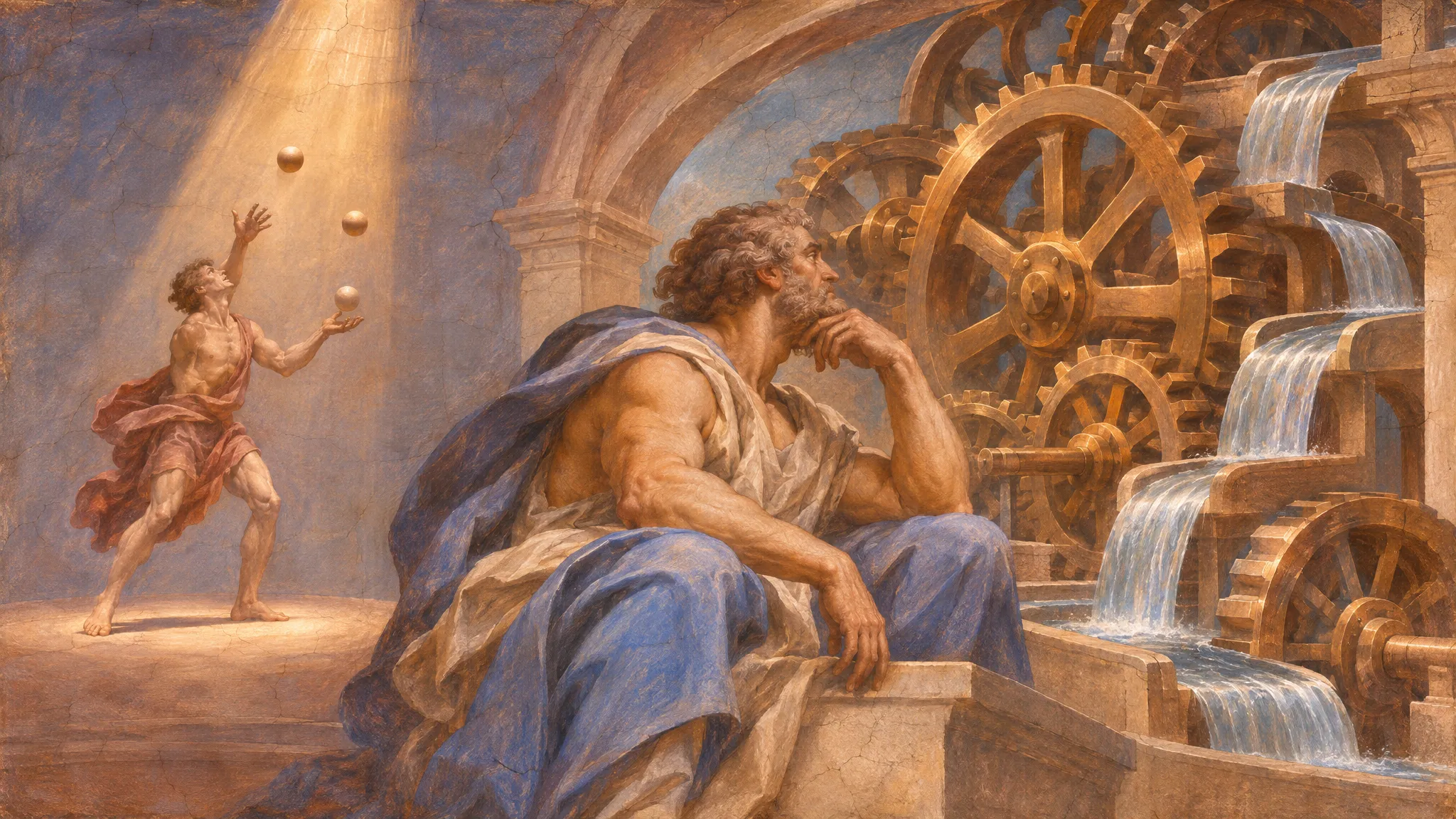
An operator builds pipes.
Buckets feel productive.
Pipes create wealth.

14) The Final Integration: Make Growth Inevitable
The operator’s endgame isn’t “how do I grind harder this month?”
It’s:
How do I make growth inevitable if we simply keep showing up and following the system?
When the system is strong:
- fear drops
- decisions get cleaner
- hiring becomes easier
- the business stops depending on mood
And that’s the real prize:
A business that behaves like a machine, not like your nervous system.
Tomorrow’s Integration Exercise (One Move)
Pick ONE system (Acquisition, Sales, Delivery, or Client Success) and write:
- The outcome it must produce
- The metric that proves it
- The 5–10 steps that create it
- What “good” looks like at each step
- Who could own it
- What they need to succeed
Do that once, properly, and you’ll feel the shift.
Because you’ll stop thinking “I need to do more.”
You’ll start thinking:
“I need to design better.”
And that’s when you become dangerous.
Mohanad
Düsseldorf, 27 January 2026