Business
The Delete Button Is a Growth Strategy
Growth usually means adding more. Sometimes the faster way forward is three hard questions and the courage to delete what fails them.
By Mohanad Anan 3 min read
I’ve been thinking about something lately.
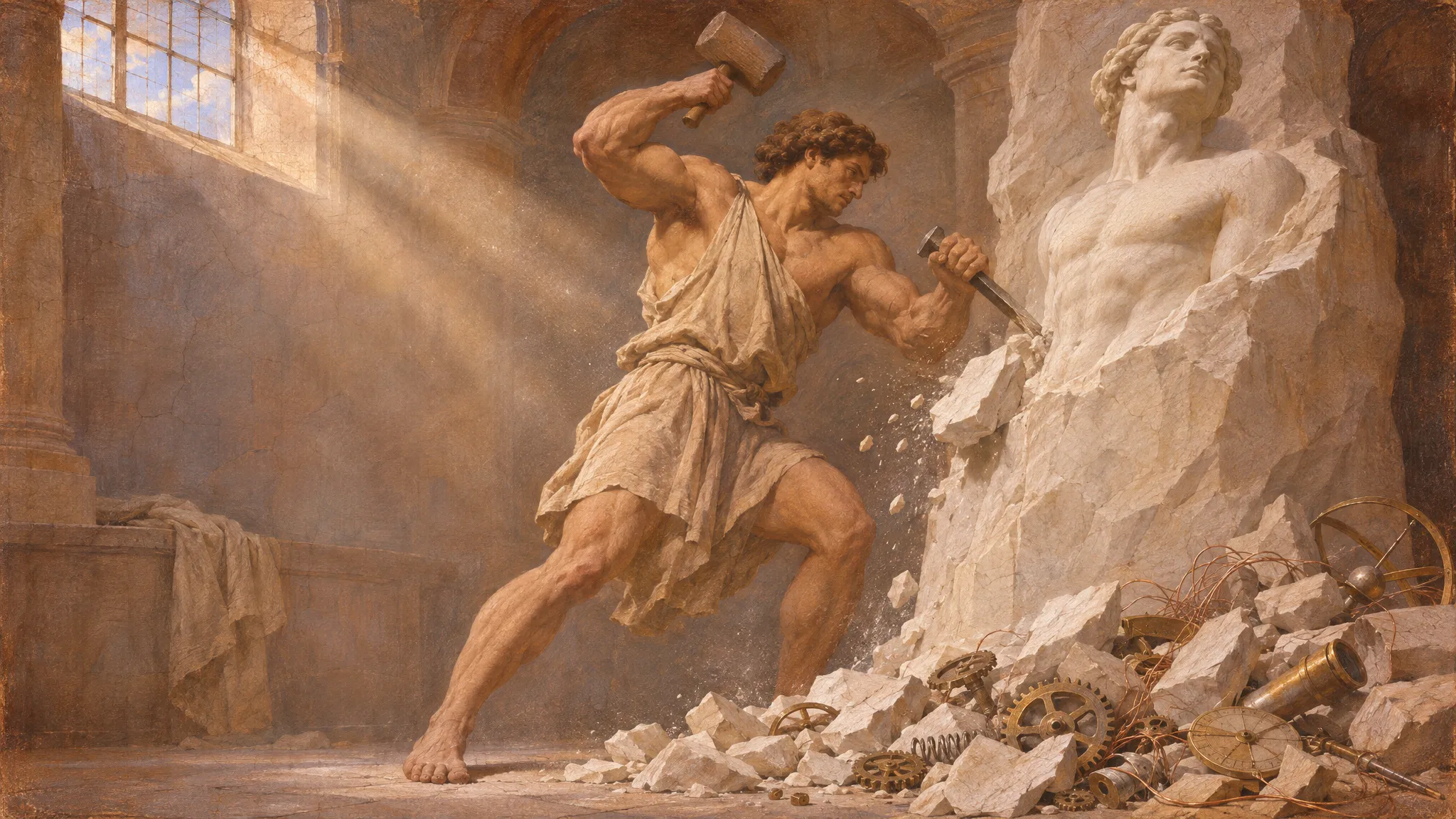
What if one of the best ways to grow a business isn’t actually to build more, but to delete more?
We tend to associate progress with adding things. More tools, more features, more projects, more automations, more ideas to execute.
And don’t get me wrong, I’m a big believer in building things, experimenting, and constantly improving.
But there’s a problem.
At some point, adding more stops being progress and starts becoming a distraction.
You end up with 20 different things running in parallel, each consuming a little bit of your time, money, and mental energy. And before you know it, you’re spending more time managing complexity than actually moving the business forward.
So I’ve been thinking about a very simple framework.
Three questions. That’s it.
Before building something new, introducing another tool, starting a project, or even keeping something that already exists, ask yourself:
- Will this increase sales?
- Will this improve our product or the value we deliver?
- Will this improve our operations? And if yes, how exactly?
The third question is particularly important.
Because almost anything can be justified with “this might make things easier” or “we could potentially use this in the future.”
But that’s not good enough.
How exactly will it help? Will it save us time? Reduce costs? Eliminate repetitive work? Make something more reliable or scalable?
If you can’t articulate the actual benefit, there’s a good chance you’re just adding complexity for the sake of adding complexity.
Now comes the difficult part.
If something doesn’t contribute to any of these three areas, delete it.
Not “let’s keep it for later.”
Not “maybe we’ll need it someday.”
Just delete it.
That could be a feature nobody actually needs, a subscription you’re barely using, a side project that’s been sitting unfinished for months, or even an internal process that exists simply because someone introduced it two years ago.
And yes, that includes ideas you personally love.
I think that’s where it gets particularly difficult, especially for people who enjoy building things.
Because sometimes we’re so attached to an idea, or to the effort we’ve already invested in it, that we forget to ask whether it still makes sense.
But the time you’ve already invested isn’t a good reason to keep investing more.
Simplicity is an unfair advantage.
Every tool requires maintenance. Every project requires attention. Every additional process introduces another layer of complexity.
And while each one might seem insignificant on its own, together they create an enormous amount of friction.
The interesting thing is that removing something doesn’t just save the time you spend on that particular thing.
It also frees up the mental capacity that comes with no longer having to think about it.
And that matters.
Because you can have the best ideas, the most talented people, and access to incredible technology, but if your attention is constantly divided between 50 different priorities, you’re probably not going to execute exceptionally well on any of them.
I’d rather have five things that work incredibly well than fifty things that are constantly “in progress.”
Of course, not everything has to generate revenue immediately. Some investments take time, and some experiments fail before you learn something valuable.
But even those experiments should have a clear purpose.
The goal isn’t to stop experimenting. It’s to stop confusing activity with progress.
And I think that’s a distinction we don’t make often enough.
Growth doesn’t always require another tool, another feature, another meeting, or another brilliant idea.
Sometimes the smartest thing you can do is look at everything you’ve already built, question why it exists, and have the courage to remove what no longer serves a purpose.
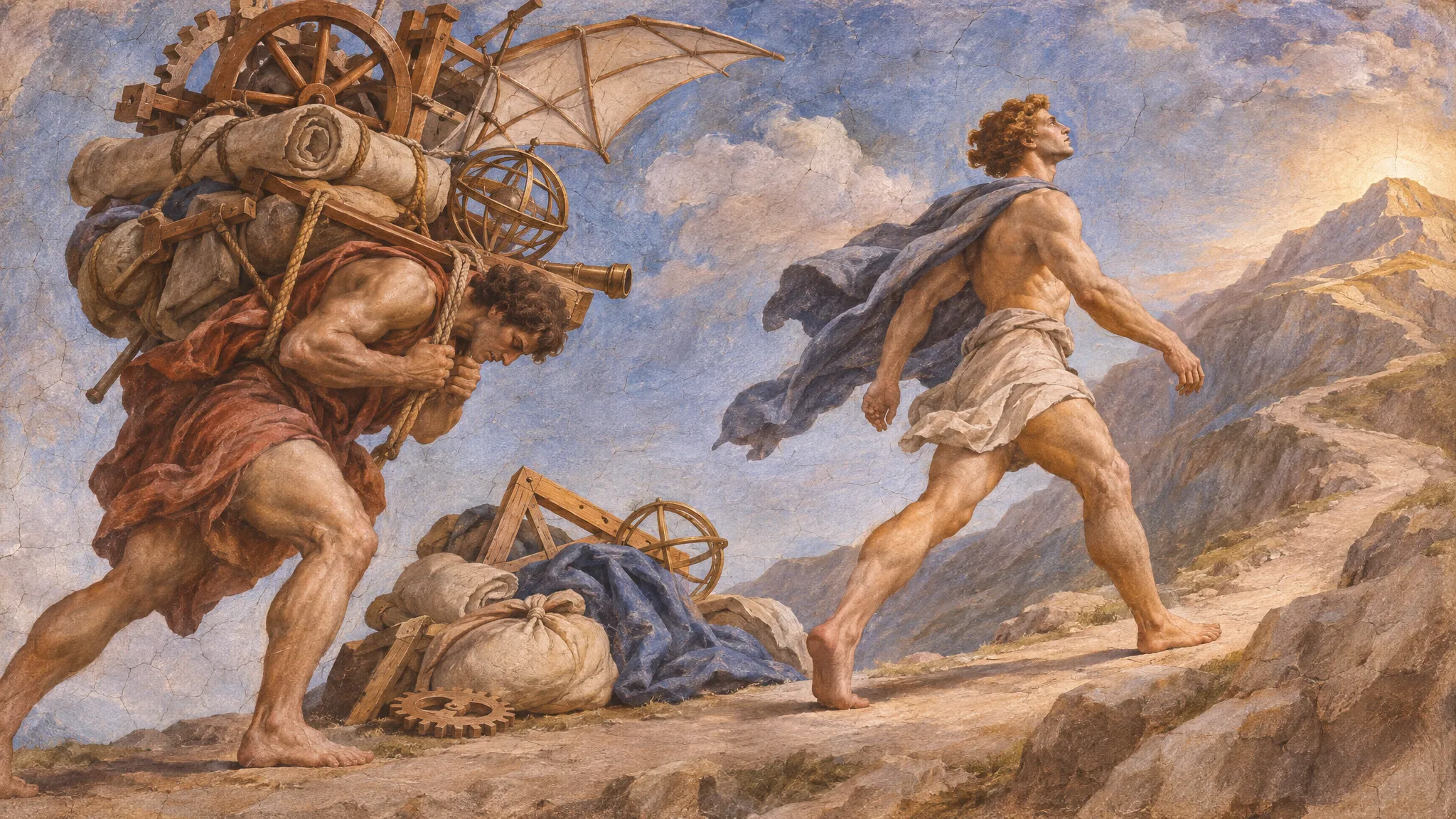
Because sometimes, the fastest way forward is to carry less.
Mohanad
Düsseldorf, 08 October 2026