Psychology
Time Doesn't Make You Grow. Experience Does.
It wasn't the years that changed you. It was what you lived through. So why wait for life to hand you the experiences?
By Mohanad Anan 5 min read

In this essay · 5 sections
Here’s something I’ve been thinking about lately.
Have you ever watched an old video of yourself, maybe from five or ten years ago, and thought:
Oh my God. Was that really me?
The way you talked. The way you behaved. The things you believed. The things you were afraid of.
You almost feel like you’re watching a completely different person.
And naturally, we tell ourselves:
Well, I’ve grown up. It’s been ten years, after all.
But here’s the interesting part.
What if time had almost nothing to do with it?
Think about it.
What exactly happened during those ten years that made you the person you are today?
It wasn’t the calendar moving forward.
It was the uncomfortable conversations you had. The mistakes you made. The people you met. The failures you experienced. The responsibilities you took on. The situations you were terrified of, but faced anyway.
It wasn’t time that changed you. It was everything you experienced during that time.
And I think this realization changes the way we should approach personal growth entirely.
Your Age Is Not Your Experience
We tend to associate wisdom, maturity, and personal development with age.
And sure, there’s a correlation.
But it’s not necessarily because older people have lived longer.
It’s because they’ve generally had more opportunities to experience life.
Now imagine two people.
One spends ten years doing roughly the same things. Same routines. Same environment. Same challenges. Avoiding uncomfortable situations whenever possible.
The other spends those same ten years constantly exposing themselves to new challenges, taking responsibility, making mistakes, meeting new people, building things, failing, and trying again.
Do you really think those two people will develop at the same rate?
Of course not.
One has lived ten years. The other has accumulated ten years of experiences that actually challenged and changed them.
And that’s where things get interesting.

What If You Could Accelerate Your Own Growth?
If experience is one of the biggest drivers of personal development, then why should we passively wait for life to give us experiences?
Why not deliberately create more of them?
Think about that for a second.
What if you could accumulate in one year the kind of meaningful experiences most people accumulate in five?
Not by working five times as many hours.
But by deliberately putting yourself in situations where you’re forced to learn, adapt, and grow.
That conversation you’re afraid to have?
Have it.
That business idea you’re afraid to execute?
Try it.
That responsibility you don’t feel ready for?
Take it.
That thing you’ve been postponing because you’re afraid of looking stupid?
Do it anyway.
Because every time you avoid something out of fear, you’re not just avoiding discomfort.
You’re potentially postponing an experience that could develop you.
And sometimes, the anticipation of something frightening is much worse than the experience itself.
You spend months imagining everything that could go wrong, only to finally do it and realize:
Wait. That’s what I was so afraid of?
And suddenly, something that used to terrify you becomes completely ordinary.
Not because the world changed.
But because you did.
Fear Can Be a Compass
Here’s a mental model I find incredibly useful:
When something scares you because it challenges your current abilities, there’s a good chance it’s pointing toward an opportunity for growth.
Not every fear, of course. Some fears are there to protect us from genuinely dangerous situations.
But I’m talking about the fear of rejection. Failure. Embarrassment. Responsibility. Uncertainty.
The fears that keep us comfortably inside the version of ourselves we already know.
Those are the interesting ones.
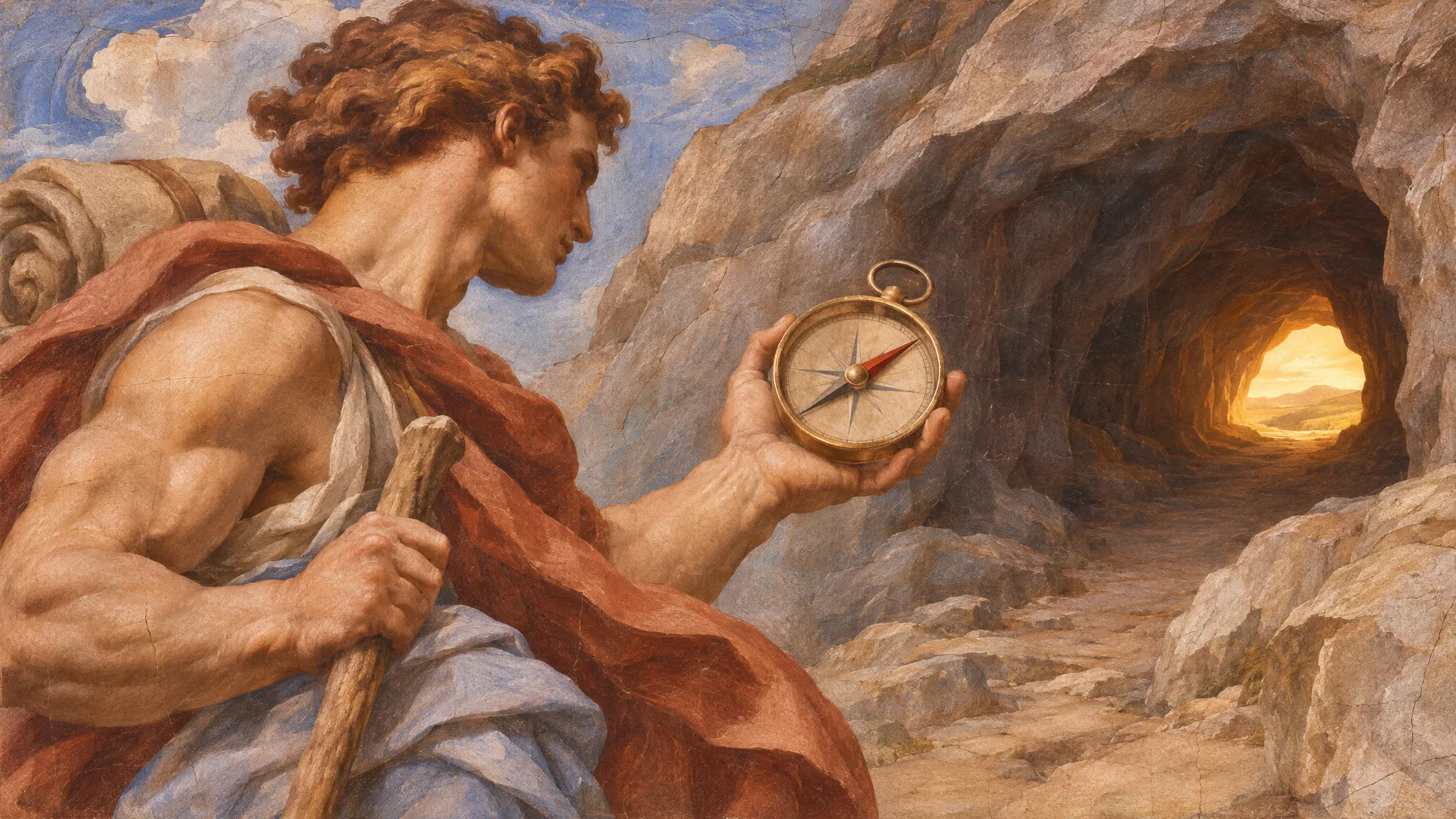
Because on the other side of those experiences is often something much more valuable than the outcome you were originally chasing.
It’s a more capable version of yourself.
You might fail at the business.
You might get rejected.
You might embarrass yourself.
But you’ll walk away with information, perspective, and experience that you didn’t have before.
And if you actually reflect on what happened and learn from it, that experience compounds.
You Don’t Need to Wait Five Years to Become Your Future Self
This is the part that really fascinates me.
We often imagine our future selves as more confident, more intelligent, more capable versions of who we are today.
We picture ourselves five years from now, finally comfortable doing things that currently intimidate us.
But why five years?
What exactly are we waiting for?
If that future version of you is the result of experiences you haven’t had yet, then perhaps the question shouldn’t be:
“Who will I become in five years?”
It should be:
“What experiences would turn me into that person, and how quickly can I start having them?”
Of course, not every kind of growth can be accelerated. Some things require patience, repetition, and time to process.
But I suspect far more of our personal development is within our control than we realize.
You don’t have to wait for life to challenge you.
You can seek out the challenges yourself.
And maybe that’s how you compress five years of growth into one.
Not by making time move faster.
But by making your experiences more meaningful.
The Takeaway
Stop measuring your growth by how much time has passed.
Start measuring it by how much you’ve experienced, challenged your assumptions, learned, and changed.
And whenever you find yourself avoiding something simply because you’re afraid, ask yourself:
“Is this actually dangerous, or am I just afraid of becoming someone I haven’t been before?”
Because the person you’ll become five years from now isn’t necessarily waiting for you five years into the future.
That person might just be waiting on the other side of the experiences you’re avoiding today.
Time will pass anyway.
The question is how much you’ll grow while it does.
Mohanad
Düsseldorf, 31 October 2026