Marketing
Your Moat Is How You Communicate Value
Same product, same price, same market. The business that finds more ways to make people care usually wins.
By Mohanad Anan 3 min read

One of the most powerful realizations I’ve had about marketing is that your ability to communicate value in different ways might be just as important as the value of the product itself.
Think about it.
Two businesses could be selling the exact same product, at the exact same price, to the exact same market.
But one business has 2–3 ads running, communicating the same message, while the other has 20–30 completely different creative ideas, angles, and ways of positioning that same product.
Who do you think has a better chance of winning?
The second business isn’t necessarily offering a better product. It’s simply exploring more ways to make people understand why they should care.
And I think that’s something a lot of marketers underestimate.
Different people can have the exact same problem, but respond to completely different messages.
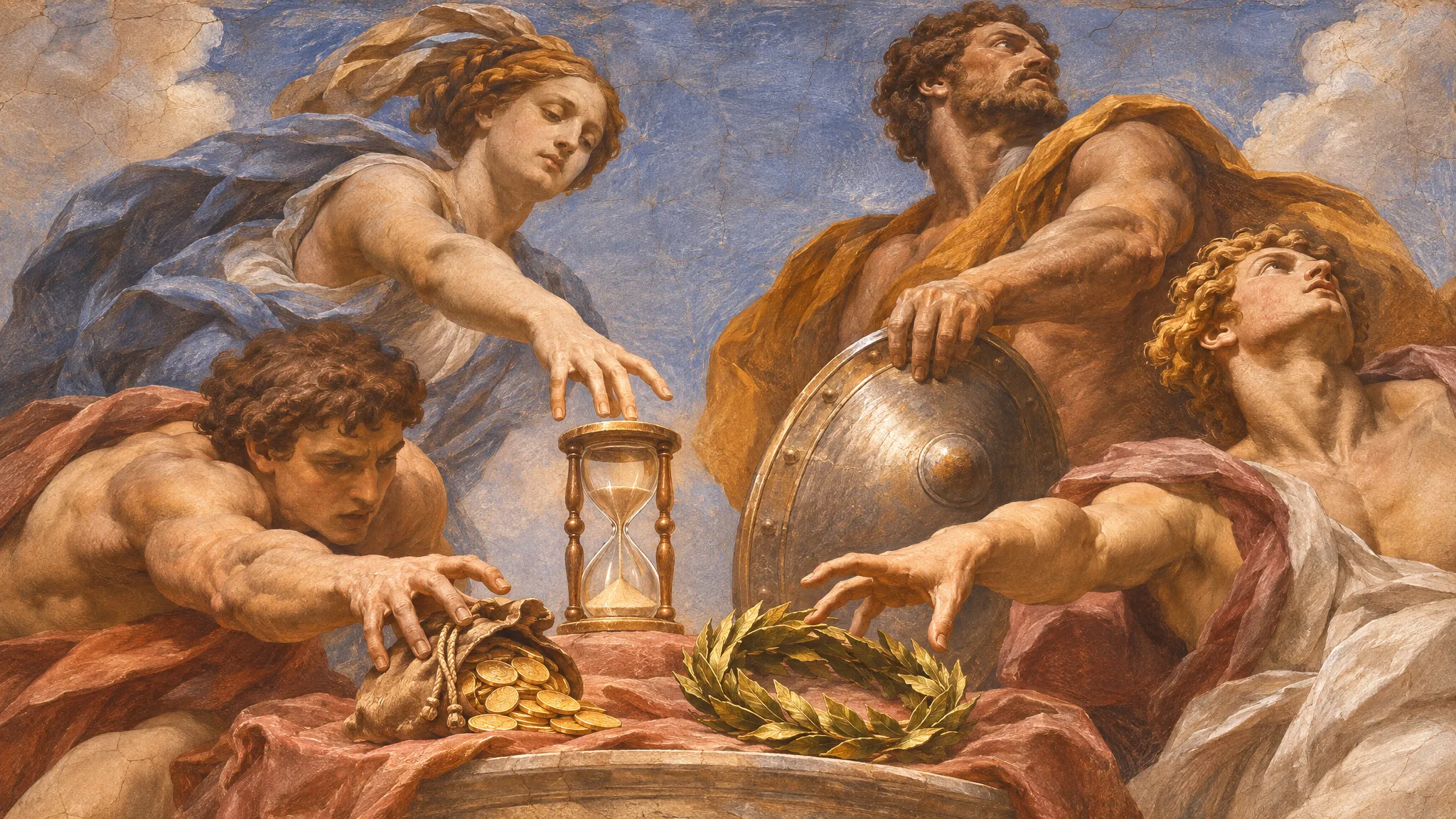
One person might be motivated by saving money. Another by saving time. Another by avoiding a painful problem. And someone else might be more interested in the status, freedom, or opportunities your product creates.
Same product. Same market. Completely different psychological triggers.
And that’s where copywriting and creative diversity become incredibly powerful.
Because when you create 20 different angles, you’re not just creating 20 ads.
You’re testing 20 different hypotheses about what your market actually cares about.
You’re discovering which problems are the most painful, which desires are the strongest, which objections are holding people back, and which ways of positioning your offer generate the most attention and conversions.
And here’s where it becomes even more interesting.
Every creative you test gives you feedback from reality.
Some messages will fail. Some will perform okay. And occasionally, you’ll discover an angle that completely changes the economics of your customer acquisition.
That insight alone could be worth more than the entire cost of your testing.
And the more genuinely different angles you test, the more opportunities you create to discover those insights.
Of course, having 30 ads doesn’t automatically make you better than someone running three. If all 30 communicate the same thing with slightly different colors and headlines, you’re not really testing diversity.
Real creative diversity is diversity of ideas, not just diversity of designs.
It’s about understanding your ICP so deeply that you can communicate their problems, desires, frustrations, fears, and aspirations from dozens of different perspectives.
And the advantage compounds.
Better copywriting leads to better hypotheses. Better testing leads to better market insights. Better insights lead to stronger positioning. And stronger positioning leads to better business results.
I think this is especially important in the age of AI.
When almost anyone can generate beautiful creatives, landing pages, and advertising copy within minutes, simply producing content is no longer much of an advantage.
The advantage is knowing what to communicate, to whom, from which perspective, and why.
And having the speed and discipline to test those ideas against reality.
Because ultimately, your market doesn’t care how good you think your product is.
It cares about whether you can make people understand how that product makes their lives better.
Understand your market. Find more angles. Communicate value differently. Test relentlessly. Learn from reality. Repeat.
Sometimes, the difference between a struggling business and a successful one isn’t the product.
It’s how effectively they communicate its value.
Mohanad
Düsseldorf, 25 October 2026